






High-Q Microwave Capacitors



|
Name
|
Download
|
Capacitance
|
Voltage Rated DC
|
Case size
|
Tolerance
|
Operating Temp
|
Mounting
|
RoHS
|
Dielectric
|
Frequency
|
Frequency band
|
|---|---|---|---|---|---|---|---|---|---|---|---|
| CH Series | 0.1pF ~ 1000pF | 50V ~ 1500V | 1111, 0505 | ±1%, ±2%, ±5%, ±10% | -55°C ~ 175°C | SMD | ROHS | P100, P100 | 30Hz ~ 3Hz | - | |
| SH Series | 0.2pF ~ 1000pF | 25V ~ 1500V | 1206, 1210, 1111, 0505, 0402, 0603, 0805 | ±1%, ±2%, ±5%, ±10% | -55°C ~ 125°C | SMD | ROHS | NPO, NPO | - | - | |
| NHB Series | 0.3pF ~ 100pF | 500V ~ 500V | 1111 | ±1%, ±2%, ±5%, ±10% | -55°C ~ 175°C | SMD | ROHS | NPO | - | - | |
| SHR-SHD series | 0.5pF ~ 100pF | 500V ~ 500V | 0709, 0711 | ±1%, ±2%, ±5%, ±10% | -55°C ~ 175°C | SMD | ROHS | NPO | - | - | |
| CP Series | 1pF ~ 10000pF | 200V ~ 7200V | 2225, 4040 | ±1%, ±2%, ±5%, ±10% | -55°C ~ 125°C | SMD | ROHS | P100, P100 | - | - | |
| CL series | 1pF ~ 10000pF | 200V ~ 7200V | 2225, 4040, 7065 | ±1%, ±2%, ±5%, ±10% | -55°C ~ 125°C | SMD | ROHS | NPO, NPO | - | - | |
| UBL Series | 100nF | 16V | 0402 | ±10% | -55°C ~ 125°C | SMD | ROHS | X7R | - | - |
High-Q Microwave Capacitors
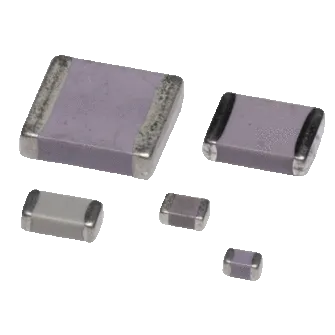
Exxelia’s High-Q microwave capacitors are designed to deliver exceptional performance in high-frequency and RF applications, ensuring minimal energy loss, superior stability, and long-term reliability. Built for aerospace, defense, telecommunications, and medical electronics, these capacitors maintain optimal signal integrity even in the most demanding environments, where performance consistency is critical.
With a high quality factor (Q) and ultra-low equivalent series resistance (ESR), Exxelia’s microwave capacitors effectively reduce power loss, making them ideal for microwave filters, impedance matching networks, resonators, and RF amplifiers. Their high self-resonant frequency (SRF) ensures seamless operation in satellite communications, radar systems, 5G infrastructure, and high-frequency wireless networks, where even minor inefficiencies can degrade overall system performance. In avionics and military applications, they enhance signal processing in airborne radar, electronic warfare (EW) systems, and secure communication networks, offering the durability required for extreme operating conditions.
Exxelia’s extensive lineup—CH, SH, NHB, SHR-SHD, CP, CL, UBL, UBZ, and XBL Series—caters to the diverse needs of engineers and project managers working on high-frequency designs.
To optimize Q-factor, capacitance stability, and thermal behavior, Exxelia employs specialized ceramic dielectrics. C0G (NP0) dielectrics provide ultra-stable capacitance with minimal loss, making them the preferred choice for high-precision RF filters, oscillators, and impedance tuning networks. For applications demanding higher capacitance density, high-K dielectrics (X7R, X5R, etc.) are tailored for power supply decoupling, coupling capacitors in RF front-end modules, and high-frequency energy storage. Custom dielectric formulations are also available to meet the unique demands of mission-critical RF and microwave systems, ensuring the highest level of electrical performance and environmental resilience.
By combining advanced ceramic materials with precision manufacturing, Exxelia’s microwave capacitors provide engineers, buyers, and RF system designers with high-performance solutions that optimize high-frequency circuits, improve power efficiency, and ensure long-term operational stability in cutting-edge communication, aerospace, and defense applications.

Frequently Asked Questions
Still have questions ?
