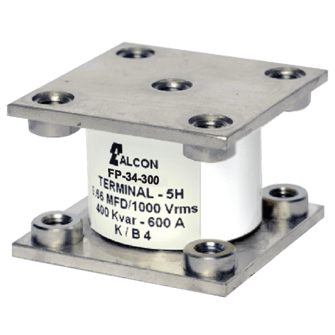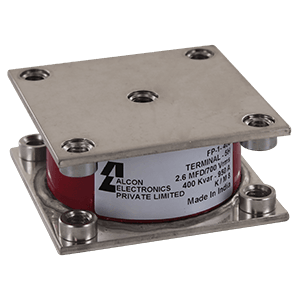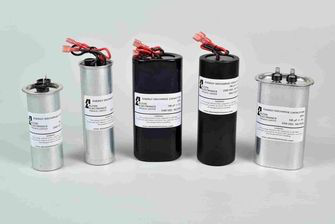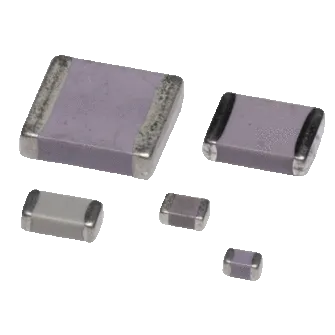

• Conduction cooled
  • Polypropylene dielectric 
  • Self-healing
  • Operating frequency up to 1300 KHz
  • Maximum operating core temperature 85°C
  • Voltage Rated AC
350Vac ~ 450Vac
  • Capacitance
680nF ~ 6800nF
  • Tolerance
±10%
  • Operating Temp
-40°C ~ 170°C
  • Dielectric
Polypropelene (PP)
  • RoHS
ROHS

Typical applications : 

  • Induction Heating
  • Electric Cars
  • Medical Imaging
  • EV Wireless Chargers
  • Resonant Circuits
PN
Voltage Rated AC
Capacitance
Tolerance
Irms Max
Frequency
Power
Terminations or connections
Case code
Length
Height
Width
Diameter (Outside Diameter)
RoHS
SP0U0251100AN0V2002HK01 1100Vac 0.025µF ±10% 200A 1055kHz ~ 1270kHz 200kW 2H V2 70mm 18mm 50mm - -
SP0U0501100AN0V2002HK01 1100Vac 0.05µF ±10% 200A 527kHz ~ 636kHz 200kW 2H V2 70mm 18mm 50mm - -
SP00U101000AN0V2002HK01 1000Vac 0.1µF ±10% 300A 318kHz ~ 715kHz 200kW 2H V2 70mm 18mm 50mm - -
SP00U200700AN0V2002HK01 700Vac 0.2µF ±10% 350A 325kHz ~ 487kHz 200kW 2H V2 70mm 18mm 50mm - -
SP00U500700AN0V2002HK01 700Vac 0.5µF ±10% 350A 130kHz ~ 195kHz 200kW 2H V2 70mm 18mm 50mm - -
SP000010600AN0V2002HK01 600Vac 1µF ±10% 400A 89kHz ~ 128kHz 200kW 2H V2 70mm 18mm 50mm - -
Compliance and certifications
certification
Custom Qualification Plan
Would you like to ajust a little something?

Customize it

You may also be interested in
Frequently Asked Questions

Find answers to the most frequently asked questions about our products and services.
Mica Dielectric Capacitor Technology

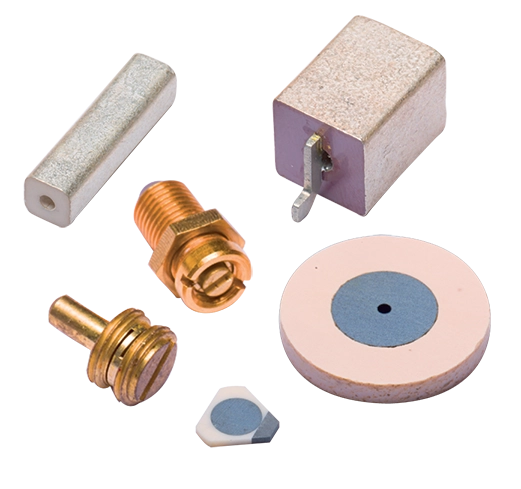
This natural mineral insulator has outstanding dielectric properties that are ideal for long-life high-stability capacitors with low loss at all frequencies, and high dielectric strength. This type of capacitor is used particularly for high frequency and delay line applications, oscillating circuits, emission devices and calibrators.

Mica dielectric capacitor technology allows for several custom design applications including: 

  • High voltage capacitors (up to 50 kV)
  • High temperature capacitors (up to 250°C)
  • Precision capacitors (up to ± 0.1%)
  • High stability capacitors (– 20 + 30 ppm/°C)
  • High frequency capacitors ( up to several GHz). 

The majority of these capacitors are manufactured to comply to specifications NF-C-83120;MIL-C-5 and MIL-PRF-39001 standards.


Mica capacitors are noted for the following characteristics:

  • Temperature performance
  • Low loss at all frequencies
  • High dielectric strength
  • Stability over time
Why choose a Silvered Mica Capacitor?

Silver mica capacitors provide superior stability and low loss when used in RF power circuits that require low pico farad (pF) and nano farad (nF) ranges. Older silver mica capacitors were manufactured in layers of mica and silver, but the layering allowed room for air gaps that reduced the stability and could also create stress fractures in the assembly.

Modern manufacturing uses silver plated to mica layers, eliminating the gaps. When the desired number of layers is obtained, the assembly is coated in an epoxy or ceramic resin. The coating reduces fracturing of the layers and seals the assembly from moisture and particles that could interfere with the capacitance value.

Mica capacitors are useful in circuits for ripple filtering and are often found in time constant, coupling or resonance circuits. In addition to radio circuits, they are used in TV transmitters and Cable TV amplification circuits. Mica is also a superior choice in high-voltage inversion and power conversion for energy absorbing snubber applications with capacitances of up to 10 nF.

High Voltage and Custom Mica Capacitors

Standard silver mica capacitors are normally designed to handle voltages from 100 to 1000 volts. High-voltage RF transmitter applications can call for higher tolerances. Mica capacitors are available for voltages up to 20kV.

Our expert engineering team can create the mica capacitor with the characteristics you require. Send us your drawing or file and we will work with you to manufacture the correct size, lead style and capacitance you desire.

Still have questions ?
Can’t find the answer you’re looking for ? Please contact with our customer service.
Contact